Why Sahafiun Changed Its Licence from CC0 to CC BY and Added MIT for Code
Here at Sahafiun, we are always looking for better ways to share our work while protecting both the interests of our creators and the usefulness of our content. Today, we are announcing an important update to how all our content is licensed.
We have moved from the CC0 1.0 Universal Public Domain Dedication to the Creative Commons Attribution 4.0 International (CC BY 4.0) for all our blog articles, images, audio, and video content. Additionally, all our code, scripts, and software are now under the MIT Licence.
This change might seem technical, but it is about making a thoughtful choice for the future of open content. Here is why.
Why We Are Moving Away from CC0
The CC0 license is one of the most permissive tools available; it effectively dedicates a work to the public domain. It allows anyone to use, share, or adapt content for any purpose without any legal requirement to give credit to the original creator. While this offers maximum freedom, it also presented several significant drawbacks for a content platform like ours.
The Need for Clear Attribution
The most common concern with CC0 is the lack of an attribution requirement. For content creators, receiving credit is fundamental. It builds reputation, allows audiences to trace the original source, and ensures that the hard work behind the content is recognized.
By moving to CC BY, we now require that anyone who uses our content must provide appropriate credit back to Sahafiun and its authors. This simple, modest requirement (which does not restrict commercial use or adaptation) respects the efforts of our writers and creators by ensuring their work is properly acknowledged.
The full CC BY 4.0 licence can be read here:
https://creativecommons.org/licenses/by/4.0/
Compatibility Concerns with Open Source
Another limitation of CC0 is that it has not been approved by the Open Source Initiative (OSI). The OSI is the leading organization that defines what “open source” means. This lack of approval can create confusion or compatibility issues, especially for developers who want to use our content in ways that align with standard open-source practices. The CC BY 4.0 license, by contrast, is OSI-approved, making it a more compatible and recognized choice for the broader open ecosystem.
Patent Rights Are Not Waived with CC0
Perhaps the most critical issue is patent protection. The CC0 license does not waive any patent rights held by the licensor. This is a major omission because it means that while copyright is waived, the licensor retains full control over any patents that might be relevant to the use of the work. This is particularly problematic for software and technical content. The CC BY license, like other CC licenses, does not specifically address patents either, but it is a more standard and well-understood tool for creative works. We have chosen to address software separately with a dedicated software license.
The Dual-Licence Approach: CC BY for Content, MIT for Code
Our previous approach treated all content uniformly under CC0. This caused confusion because code snippets embedded in our blog posts were also under the public domain dedication, even though code often benefits from the stronger protections and compatibility guarantees of a dedicated software licence.
To address this, we have adopted a dual-licensing model:
- Creative Content (blog articles, images, audio, video): CC BY 4.0 International.
- Code and Software (code snippets, scripts, technical implementations): MIT Licence.
Why the MIT Licence?
The MIT Licence is one of the most widely used and permissive open-source licences. It is short and simple; it allows anyone to use, modify, and distribute our code for any purpose (including commercial uses) as long as they retain the copyright notice and permission notice. This is the perfect match for our code because it:
- Is OSI-approved, ensuring maximum compatibility with the open-source community.
- Clearly grants patent rights, addressing the patent omission in CC0.
- Is extremely permissive, allowing our code to be incorporated into any project, just like CC0 did, but with better legal clarity.
The full MIT Licence text is available at:
https://opensource.org/licenses/MIT
Our Official Licence File
All licensing details (including the full legal code for CC BY 4.0 and the MIT Licence) are stored in our public GitHub repository. You can view the authoritative licence file here:
https://github.com/mhishamsg/README/blob/main/LICENSE.txt
For a human-readable summary, please visit our dedicated licence page at:
https://sahafiun.com/licence
What This Means for You
If you are a user or a developer, the practical impact is minimal. You can still:
- Use and share our content freely, including for commercial purposes.
- Adapt and remix our content to create new works.
The only new requirement is that for our creative content (articles, images, etc.), you must provide appropriate attribution. For our code snippets and software, you must retain the MIT copyright notice. This is a small ask that ensures the long-term sustainability of our platform and respects the hard work of our creators.
We believe this change is the best path forward. It balances the openness we value with the recognition and legal clarity that our content and code deserve. Thank you for your support as we continue to build a more open and respectful ecosystem.
The Sahafiun Team
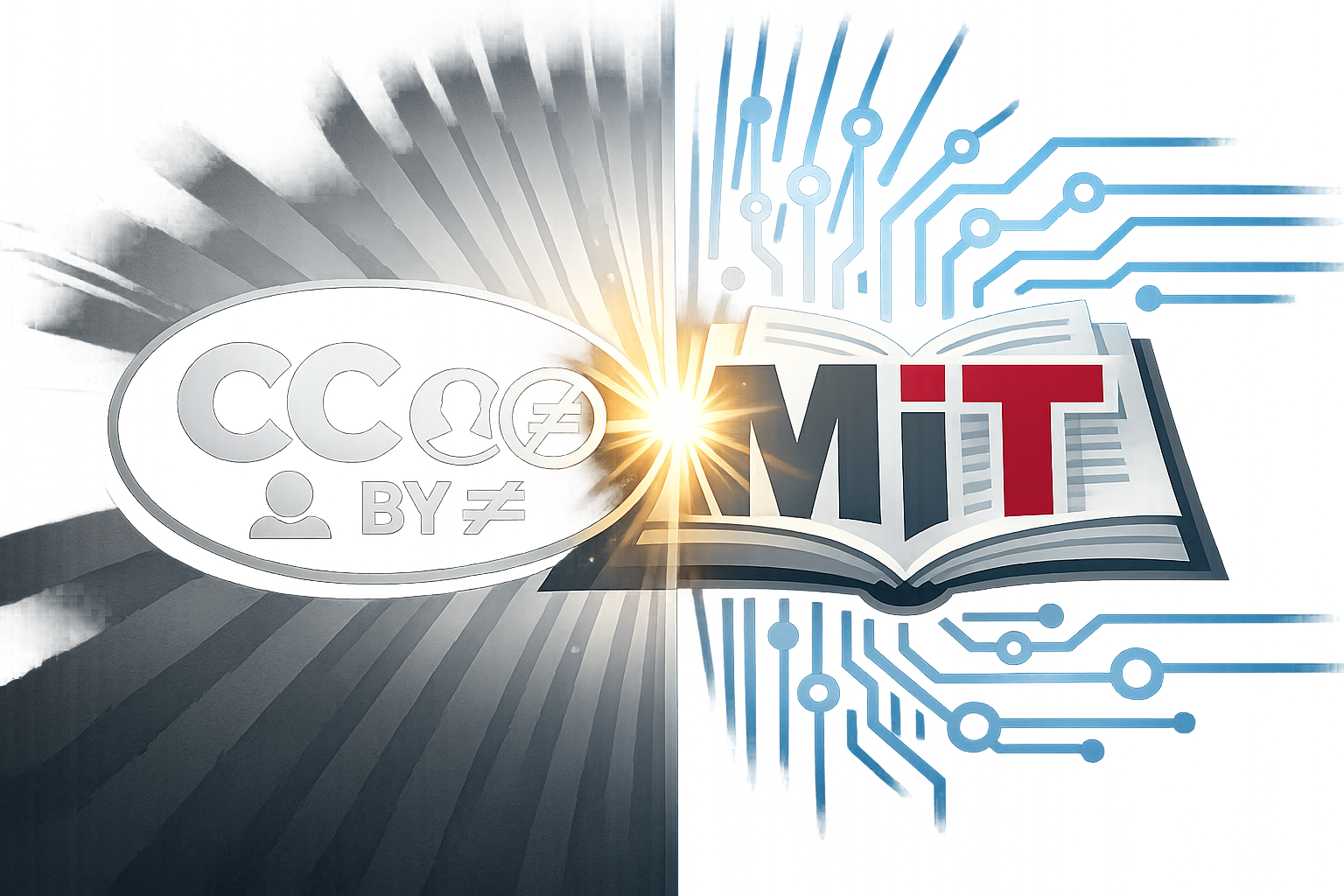
(The featured image was generated by CoPilot)