
Asia’s High Energy Convergence: When AI Meets the Power Wall
Artificial intelligence is rapidly increasing demand for compute, digital connectivity and electricity. Across Asia Pacific, data centre capacity is projected to grow from approximately 32 gigawatts in 2025 to 57 gigawatts by 2030, driven predominantly by AI workloads. But this is no longer only a technology story. It is increasingly an infrastructure story. AI is bringing together three historically independent systems: compute infrastructure with GPUs and AI servers; digital infrastructure with data centres and fibre networks; and energy infrastructure with power generation and electrical systems. These layers must now scale in parallel. However, they are not scaling at the pace or in the locations required. AI-driven demand is colliding with structural infrastructure limitations, creating what the whitepaper describes as the High Energy Convergence; a phase in which digital infrastructure demand and energy system capacity are becoming structurally intertwined.
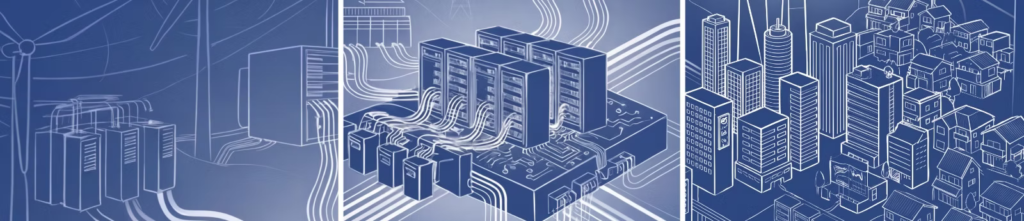
The primary constraints centre on deliverable power and grid access. Deliverable power means reliable, firm, continuous electricity supply in the right locations near digital demand centres. Power in the wrong location has limited value. AI workloads require large, continuous power in specific spots, often near major digital and population centres. Infrastructure systems were not originally designed for this level of localised intensity. In several Asian markets, interconnection timelines now extend multiple years. Transmission upgrades lag demand. Generation capacity may exist nationally, yet not in proximity to digital demand centres. In dense hubs such as Tokyo, Seoul, Singapore and Johor, hyperscalers are competing for limited grid capacity allocations. This dynamic creates a power race for digital infrastructure development sites with secured grid access.
On the energy side, the region faces a substantial transition requirement. Approximately USD 2 trillion in energy transition investment will be needed by 2030 to stay on track with a net zero scenario. This figure reflects both decarbonisation objectives and structural demand growth. In a constrained capital environment, deployment is becoming more selective, focusing on scalable capacity. The most compelling opportunities sit at the intersection of digital and energy infrastructure. Behind-the-meter solutions are emerging as structural responses in markets where transmission upgrades lag. These include integrated distributed energy platforms combining on-site solar generation, battery energy storage systems and energy management software. Structured as Energy-as-a-Service or microgrid models, they allow data centres and industrial users to partially decouple from grid bottlenecks, reducing exposure to multi-year interconnection delays.
Data centre operators are now integrating energy procurement strategies directly into campus design. This means secured grid allocations, long-term power purchase agreements, on-site generation and battery storage systems. At the same time, energy platforms are evolving to serve digital demand centres more directly through distributed energy systems, microgrids and hybrid power solutions located near compute clusters. The paper highlights how a large AI facility may need 100 to 300 megawatts of dedicated electricity capacity, placing significant pressure on local substations. Traditional data centre racks consume 10 to 15 kilowatts, but AI racks can require approximately 100 kilowatts; a nearly tenfold increase in power density. This intensity is why deliverable capacity now commands a structural premium.
Across Asia, market conditions diverge. Policy stability supports long-term visibility in certain developed markets and selectively in Southeast Asia. Australia has surpassed 40 per cent renewable penetration but faces grid stability challenges and the need for further transmission build-out. In contrast, markets such as Japan, South Korea and Singapore face structural constraints around land, power and permitting. This fragmentation creates opportunities for focused execution. The whitepaper concludes that infrastructure value is increasingly defined by deliverable capacity, not announced pipelines. Platforms that can secure power, connectivity and integrated solutions near demand centres are positioned to support the next phase of expansion. The High Energy Convergence is expected to drive one of the largest infrastructure investment cycles in modern history.