From AI Everywhere to Operational Reality: What the Next Phase of Enterprise AI Actually Looks Like
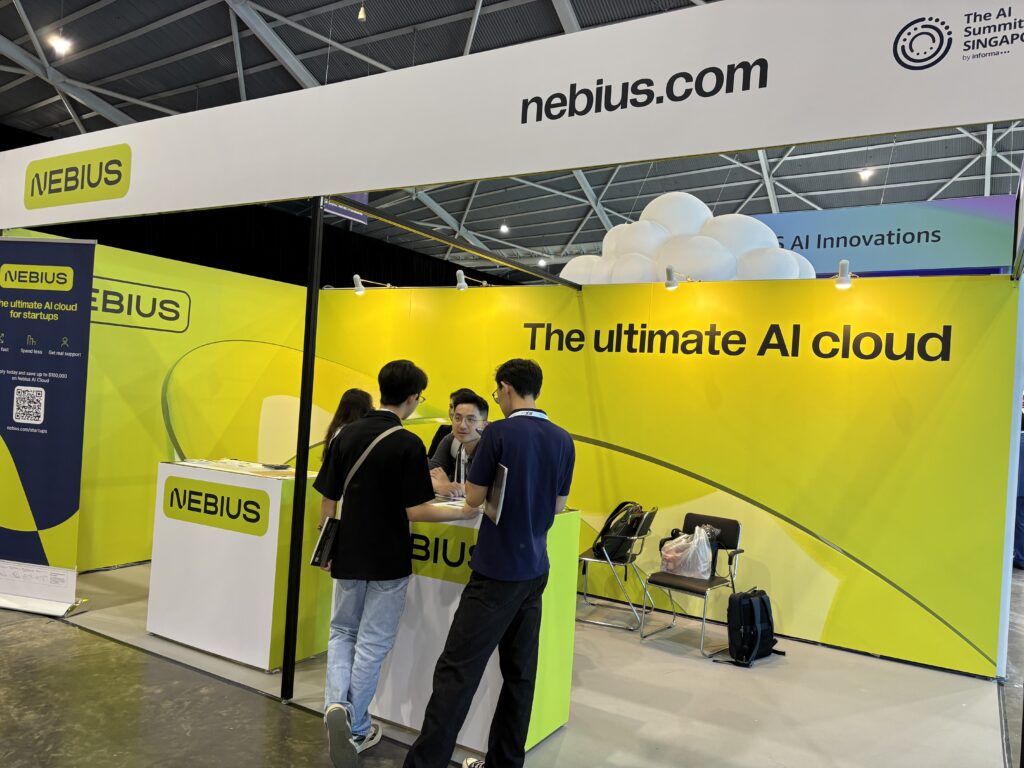
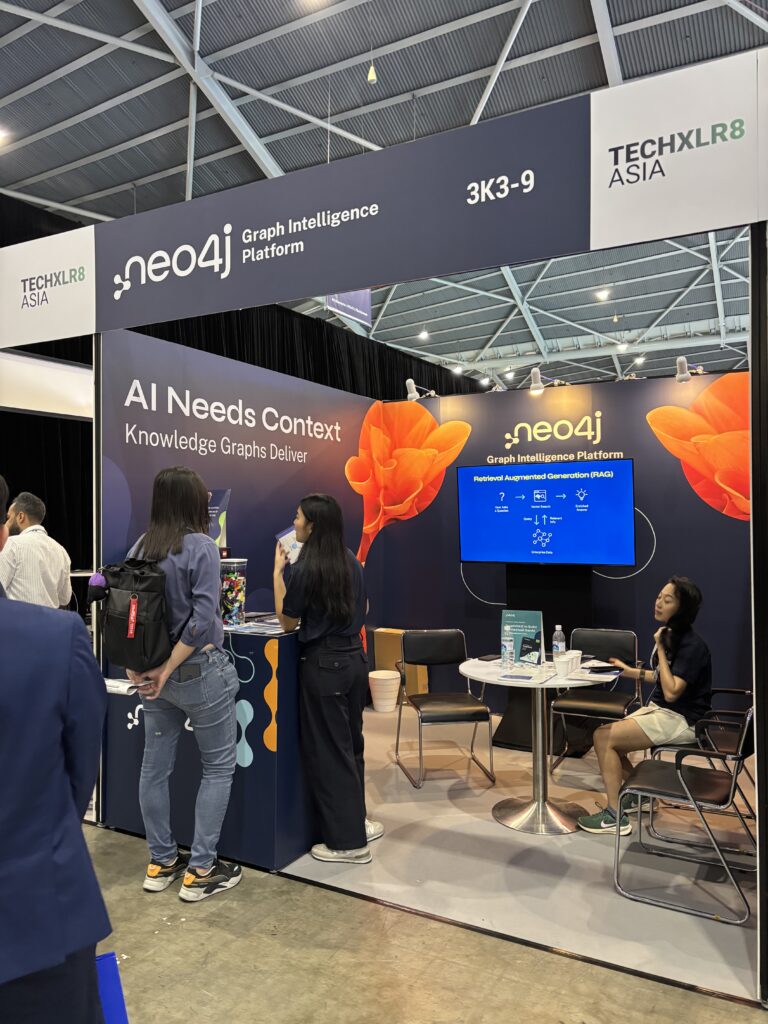
On 20 May 2026, a panel titled “What the Next Phase of Enterprise AI Actually Looks Like” took place at the AI Summit Singapore Stage in Hall 3 of the Asia Tech x Singapore event. The session was moderated by Jukka Pulkkinen, Director of the Tech Research Unit at Häme University of Applied Sciences, who was joined by four distinguished speakers: Wirawit Chaochaisit, Director of Data Science & Analytics Solutions at Pfizer; Philip Rathle, Chief Technology Officer at Neo4j; Prerit Mishra, Head of Data & AI for Asia Pacific at DHL; and Anubhav Maheshwari, Global Head of the Venture Ecosystem at Nebius. Together, they explored how companies are moving from AI experimentation to reliable, scalable, and operational AI in enterprise settings.
From Chatbots to Agentic AI
When asked what has changed most in enterprise AI over the past 12 to 18 months, the panelists pointed to a clear shift. According to Wirawit Chaochaisit, the industry has moved “from the chat-based AI into agentic AI kind of solutions.” He noted that the pace of innovation is so drastic that organisations must align their protocols and compliance measures while keeping up with new technology almost daily. Meanwhile, Philip Rathle observed that while agents are now keeping humans out of the loop for certain processes, the bigger infrastructure story is the rise of graph-based AI. He explained that the industry has progressed from trying to solve every problem with LLMs, to the era of RAG, then Graph RAG, and now to a focus on “knowledge, context,” where terms like ontology and semantics have become mainstream.
From a logistics perspective, Prerit Mishra described the current landscape as marked by “an increase of confusion” alongside “an increase in excitement.” He stressed that leaders must balance the two to prevent confusion from derailing progress or excitement from pushing things in the wrong direction. Anubhav Maheshwari noted that, as an AI cloud provider, his company initially worked with AI-native startups; however, in the last 18 months, enterprises have started pulling them into larger organisations. Employees who began experimenting with closed models are now seeking to move beyond experimental budgets to actual deployments.
Moving Beyond AI Everywhere
On the question of what fundamentally changes when organisations move beyond the “AI everywhere” phase into real operational use, the panelists emphasised integration and ROI. Chaochaisit observed that senior management is now asking for the return on investment of AI initiatives. In the pharmaceutical industry, AI is being integrated directly into workflows, for example within Salesforce, to support everything from planning to execution and performance tracking. He described this as a fundamental change: AI is moving from chat-based applications to application-specific integration.
Rathle argued that bottom-up experimentation (AI everywhere) and top-down ROI-driven deployment must coexist. He noted that technology leaders have said that measuring ROI too early can stifle skill development, yet the business only gains true value when “you hold people accountable and you have a set of priorities.” He cited examples of large-scale success, such as an AI application at Walmart that helps managers respond to employee feedback, and an Agentic application at Uber that assists drivers. These, he said, are not ad hoc efforts but are driven by clear business priorities.
Mishra added that “AI everywhere does not mean access to AI.” He argued that KPIs based on the number of chatbot queries are outdated. Instead, the focus should be on integration: “integration from my perspective is more around model to process.” He said that organisations must ask how AI changes decisions and processes, and that these fundamentals are still evolving.
Maheshwari distinguished between enterprises adopting third-party technologies and building their own homegrown solutions. He noted that in the last six months, the rise of agentic AI has enabled organisations to connect their own datasets and work processes to achieve specific outcomes, balancing best-in-class external solutions with internal data compliance and sovereignty.
Fewer Models or Smarter Integration?
When asked whether the future lies in a few powerful models or in better integration into business processes, the panelists saw a hybrid picture. Chaochaisit predicted that “there will be more convergence into a few selected top AI models,” but also that domain-specific models, such as those designed for coding, will remain important. He expected a mix where each model becomes an expert in its own application.
Rathle described a common pattern: developers start with the largest possible model, then move to smaller, more economical models for production. He highlighted the need for composite AI systems, where reasoning happens partly in a graph intelligence platform and partly in the model, because “models aren’t particularly great” at certain kinds of reasoning, such as multi-hop reasoning or finding ultimate beneficial owners. He advocated for using tools and graphs for certain operations and models for others, using them together for complementarity.
Where to Invest an Extra Million
Asked where they would invest an additional one million dollars, the panelists gave varied but complementary answers. Rathle said he would invest it in data, because “data ultimately is what pays the dividends.” He argued that model providers have already invested hundreds of billions in churning the world’s data, so competitive differentiation now comes from how companies use their own data, including breaking down silos and understanding cause and effect.
Mishra offered a different perspective, suggesting that the real investment needs to happen in places where direct money may not be required. He argued that fixing data and legacy systems should happen in parallel with AI work, not as a deferral mechanism. He called for upskilling of top leadership, stating that “the C-suite needs to understand” the technology completely, and for reorganising the organisation to create new roles focused on AI integration.
Maheshwari agreed that a balance is needed: better data, better compute, and more memory. He also highlighted the importance of leadership empowerment, citing a presentation by a Singapore politician who uses AI personally to understand its ramifications. Chaochaisit added that he would spend the money on people retraining, because “to carry the whole organisations together with these AI transformations, we need people to be keen” on managing their data and building agentic AI integration from the ground up.
Defining Reliable AI
Reliability means different things to different organisations. For Maheshwari, as an AI infrastructure provider, reliability means ensuring GPU infrastructure is available to customers with high uptime, which requires teams focused on remediation, buffering, and auto-healing. Mishra shifted the focus to decision velocity: “are we making quicker decisions? are we reducing cycle times?” He said that reliability of decisions matters more to enterprise P&L owners than model uptime.
Rathle distinguished between non-functional reliability (availability and security, which he said should be left to infrastructure teams) and functional reliability, which depends on the application. For summarising meeting notes, reliability means something different than for manufacturing pharmaceuticals, where there is no tolerance for risk. He also stressed the importance of explainability: users need to understand why a decision is being made in order to assure trust. Chaochaisit agreed that reliability depends on the application; for mission-critical applications such as patient health, evaluations must be super critical, while for creative content, a margin of error may be acceptable.
Skills and Leadership Gaps
On the final topic of skills and leadership gaps, Mishra argued that upskilling is not an option but a necessity, and employees must actually use what they learn. He noted that the role of product managers and owners has evolved significantly with AI applications. The biggest challenge, he said, is moving AI from pilots to products, because “a pilot is meant as a project whereas an AI solution at scale is a product.” The skills required to make that transition, including bringing together IT and P&L owners, are not yet fully built into most organisations.
Audience Questions: ROI and Fear
During the audience Q&A, a student named Elena asked how using AI can generate projects with a return on investment, given that some projects fail. Rathle responded that a decade ago, 90% of enterprise IT projects also failed, and that failure is a natural part of innovation. He argued that “if you’re not failing to some degree, then you’re not trying hard enough.” The key is knowing when to stop. He also advised against using AI to simply rewrite SaaS applications to save small amounts of money, advocating instead for bolder bets that advance the business and create new products.
Another audience member, Subh from an energy company, asked how to break the fear that AI will take jobs and how to ensure adoption across departments. Mishra acknowledged that the fear is legitimate. He said that roles are evolving, and those who start using AI soonest will have less fear than those who wait for organisations to push it upon them. He also noted that KPIs must become more shared across departments. Rathle added that peer-to-peer communication is highly effective. Creating venues such as lunch-and-learns and showcases, where employees who naturally pick up the technology can share their findings, helps address the psychological aspect of fear. He warned against putting agents on the org chart next to people, calling that “the most horrible, demoralising thing,” and advised being thoughtful about communication and organisation to help people feel valued.
Summary
In his closing remarks, moderator Jukka Pulkkinen summarised the key takeaways: organisations are moving from AI experimentation to operational reality; the real challenge is no longer building models but integrating them into reliable, explainable, and trusted systems; success depends less on technology alone and more on organisational capability and skills. He concluded that the shift is “from models to systems, from pilots to performance, and from possibilities to accountability.”