Digital Money Panel at Singapore FinTech Festival: How Forward-Looking Institutions Are Managing Risks and Seizing Opportunities
On Wednesday, November 12, at Singapore FinTech Festival, a high-profile panel titled “Digital Money: How Forward-Looking Institutions Are Managing Risks and Seizing Opportunities” convened industry leaders to discuss the future of finance. Moderated by Elise Soucie Watts of Global Digital Finance, the session featured Cuy Sheffield (Visa), Mishal Ruparel (Banking Circle), Naveen Mallela (J.P. Morgan), and Salim Dhanani (Pave Bank). Fresh from Banking Circle’s live demo of the first deposit token on a public blockchain, the discussion explored how institutions are bridging legacy systems with digital innovations to meet client demands for real-time, interoperable payments.
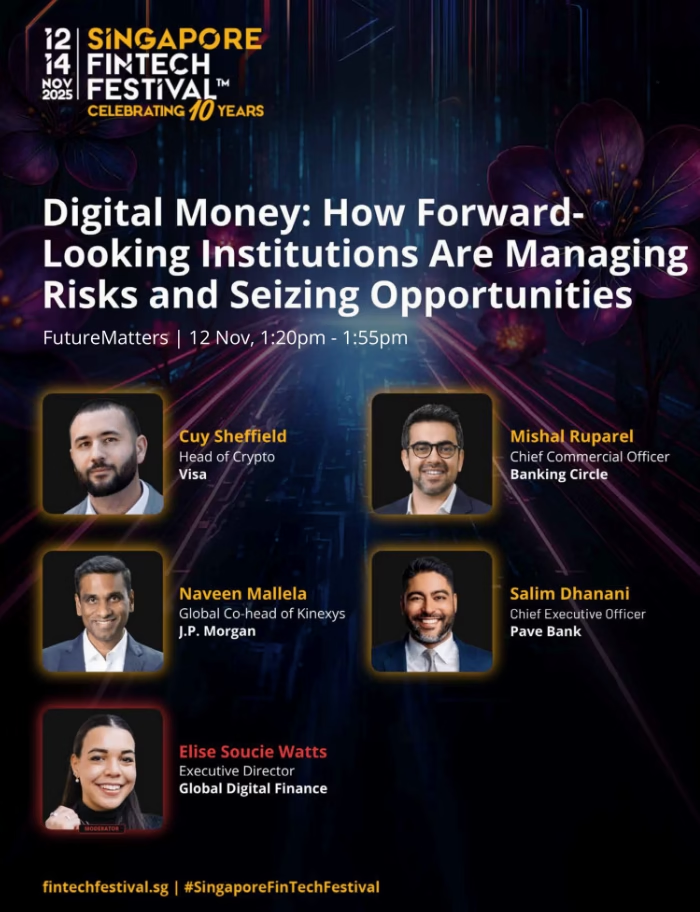
Mishal Ruparel highlighted client urgency for 24/7 instant settlements with full clarity, using stablecoins, tokenized deposits, and deposit tokens to bypass correspondent banking delays. Visa’s Cuy Sheffield detailed how stablecoins accelerate back-end settlement, with Visa now accepting USDC across Ethereum, Solana, Avalanche, and Stellar, converting to fiat seamlessly. This multidimensional treasury approach supports diverse client paces, from crypto-native neobanks to traditional banks, emphasizing convertibility as the cornerstone of interoperability.
Pave Bank’s Salim Dhanani advocated building programmable compliance from the ground up, enabling transparency, traceability, and automated risk management via smart contracts. Naveen Mallela warned of systemic risks, including smart contract exploits and rapid dollarization (99.999% of stablecoin volume in USD), urging regulators to safeguard monetary sovereignty through liquidity oversight and policy clarity. Collaboration between institutions and regulators emerged as critical to integrate digital money safely into formal systems.
The panel envisioned programmable money powering agentic AI commerce, with Cuy stressing standards to authenticate agents and prevent fraud in micro-transactions. Mishal saw stablecoins leveling the global playing field, allowing smaller institutions to compete via real-time cross-border flows in local currencies. By 2030, heterogeneous digital money forms could coexist with fiat if exchange barriers dissolve.
Underestimated signals include surging stablecoin-denominated lending reshaping credit markets, the non-negotiable need for settlement finality, on-chain cross-currency efficiency, and programmability’s transformative potential across services. Action items call for exploring deposit tokens over stablecoins, bridging legacy and new rails, developing compliance frameworks, assessing sovereignty impacts, setting agentic transaction standards, and co-creating regulatory clarity.
The session underscored that digital money is not a replacement but an evolution, requiring trust, standards, and partnership to unlock scalable, resilient financial infrastructure.