Unlocking Efficiency with Next-Gen SSDs and Converters in Data Centres
Powering the AI Era: Next-Generation SSTs and Converters for Data Centres
As the global demand for AI grows, so does the strain on data centre infrastructure. By 2030, data centres are projected to account for approximately 3% of total global electricity usage, with rack power expected to reach one megawatt by 2027. To meet these challenges, traditional power conversion methods must evolve.
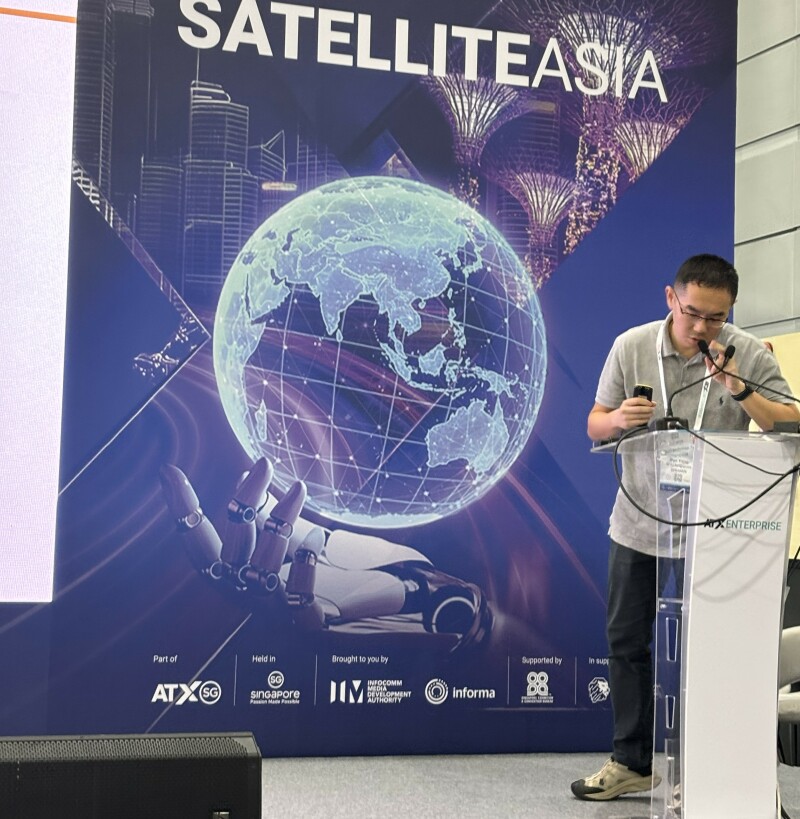
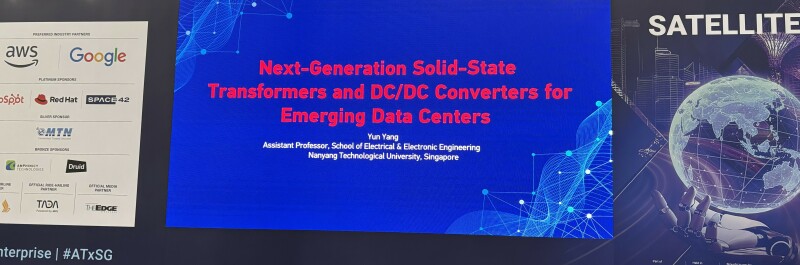
At the Asia Tech x Singapore 2026 NTU Innovation Day, Associate Professor Yun Yang shared insights into the critical power electronics technologies shaping the future of high-density, sustainable data centre power delivery.
The Shift to Solid-State Transformers (SSTs)
Conventional transformers operating at 50 Hz are often bulky and inefficient. Solid-state transformers (SSTs) offer a superior alternative by using power electronic devices to increase operating frequencies to 100 kHz and above. This shift enables a more modular, compact, and highly integrated system.
While traditional two-stage SSTs are highly reliable, they often rely on electrolytic capacitors with a limited lifespan of about three years. NTU researchers have developed a single-stage, capacitor-free SST that eliminates these bulky components. This innovation provides several key benefits:
- Extended Lifespan: Expected to last more than 10 years by removing short-lived capacitors.
- Cost Reduction: Estimated reduction in costs by 43.6%.
- Improved Metrics: Enhancements across reliability, power density, and maintenance costs.
Advanced Gate Drivers and High-Frequency Control
A major bottleneck in high-frequency power electronics is electromagnetic interference (EMI). Professor Yang’s team has patented a multifunctional gate driver that addresses this issue, reducing power losses by up to 63%. This driver achieves up to 80 MHz, enabling precise voltage restoration and high power density.
Optimising DC-DC Conversion for AI Loads
AI data centres require efficient power delivery from high-voltage buses down to the processor level. The industry is moving from multi-stage conversion toward more efficient architectures, such as 800V/48V and 48V/1V systems.
Experimental results from the NTU lab showcase 48V/1V converters that utilise AI-enhanced predictive control. By employing Physics-Informed Neural Networks (PINNs), the system can:
- Eliminate Steady-State Errors: Mitigating offsets caused by temperature rises or parameter drifts.
- Accelerate Response Time: Achieving an 86% improvement in dynamic response, with regulation times below 1 millisecond.
- Support Variable Workloads: Maintaining stability under the abruptly changing loads typical of IT environments.
The transition toward single-stage power conversion, supported by AI-driven control and advanced SST architectures, provides a scalable pathway for future infrastructure. These technologies ensure that as power demands scale, data centres remain efficient, reliable, and sustainable.
Industry professionals can look forward to further discussions on these topics at the 11th ESA Conference, held in Singapore from 13 to 15 November 2026, which will feature a dedicated workshop on solid-state platforms.